
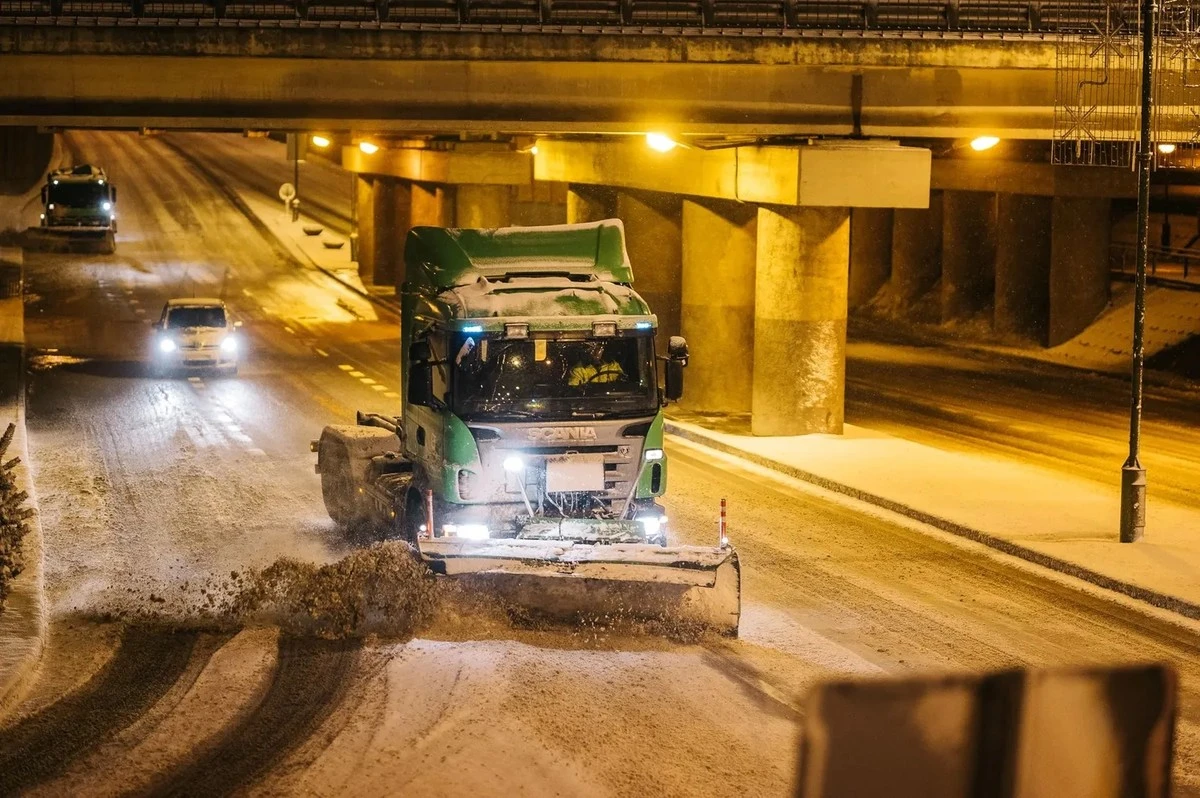
The Netherlands is currently battling a fierce winter onslaught, with heavy snowfall paralyzing streets and making daily life a challenge. While we’re all feeling the impact of the snow, many are unaware of the massive effort behind the scenes to keep things moving. Road crews are working tirelessly, but they have a crucial message for everyone: the current situation is about to change drastically, and you need to be ready.
The Snow Battle: Millions of Square Meters Cleared Daily
In the face of relentless snowfall, infrastructure maintenance companies have mobilized their entire workforce. Hundreds of employees and dozens of specialized vehicles are now working around the clock. The scale of this operation is monumental; it’s not just about clearing a few driveways, but managing vast urban landscapes under extreme conditions.
A Warzone of Snow: The Numbers Game
Imagine this: over 1.9 million square meters of streets, sidewalks, and other public areas are under continuous maintenance. To put that into perspective, that’s roughly the size of five major Dutch cities combined. This isn’t a task that can be completed in a few hours. It’s a relentless, day-and-night operation where both machines and people are pushed to their absolute limits.
Different Cities, Different Strategies
The approach to snow removal isn’t one-size-fits-all. Each city has its own unique challenges and tactics.
Early Bird Gets the Pavement: The Kēdainiai Approach
In cities like Kēdainiai, where company responsibility extends to particularly treacherous areas like stairs, public squares, and bridges, work often starts in the dead of night. The goal is to prepare the city for the morning rush hour while most residents are still asleep. Priority is given to high-traffic pedestrian zones, ensuring that by 7 AM, main staircases are not only cleared but also gritted to prevent injuries.
Heavy Artillery Against the Flakes: Šiauliai’s Fight
In Šiauliai, the main adversary is the sheer intensity and persistence of the snowfall. Here, heavy machinery takes the lead. Nine powerful tractors and a smaller one are deployed to clear sidewalks, with plans to expand the fleet. But technology isn’t the only solution. Even with advanced equipment, 21 employees manually clear sidewalks, and eight specialized vehicles patrol the streets. The strategy in Šiauliai involves salting the roads while mechanically cleaning sidewalks. This prevents snow from being compacted and freezing into ice patches.
Conveyor Belt Service: Vilnius in Real-Time
The capital, Vilnius, operates on a continuous, real-time basis. Teams respond to every weather shift instantly. As mentioned by R. Romanovas, Vilnius, like other cities, sees people working from night until late evening, and even longer during severe weather. The city attempts to combine mechanical clearing with salting, but the situation can change by the hour.

The Harsh Reality: One Clearing Isn’t Enough
Road maintenance supervisors urge residents to adopt a realistic perspective. When snowfall is continuous, achieving a perfectly clear city all at once is an impossible feat. While maximum effort is being made, the illusion that everything can be perfectly tidied up permanently must be set aside. The focus remains on constant monitoring, rapid response to changes, and prioritizing the most dangerous and high-traffic areas first.
Sisyphus’s Task: The Never-Ending Cycle
The current winter conditions demand a rhythm akin to Sisyphus’s eternal task. A street cleared one hour might be covered in snow again within the next. This means road crews repeatedly return to the same locations, clearing them time and time again.
The Coming Danger: When Salt Loses Its Power
Beyond the immediate challenge of snow, meteorologists are warning of another impending danger: a severe drop in temperature. This requires a fundamental shift in the snow-clearing strategy. In January alone, “Ecoservice” replenished its salt reserves with over 7,000 tons. However, as the thermometer plummets, salt’s effectiveness diminishes significantly.
The Science of De-Icing: Beyond Sodium Chloride
Salt is applied to sidewalks only after assessing its real effectiveness. During heavy snowfall, it’s often not used because it would simply be pushed aside during subsequent clearing before it has a chance to work. But with predicted sharp frosts, often below -10°C, standard sodium chloride becomes inefficient. In such conditions, vehicles will be deployed with calcium or magnesium chloride mixtures. These agents are more aggressive and can melt ice even in extreme cold, helping to maintain “black asphalt.” For pedestrian areas like stairs and bridges, where the risk of slipping is highest, sand and salt mixtures or grit will be used generously to increase traction.
“We hear the public’s desires and expectations and we understand them perfectly. We are doing everything we can to ensure the most favorable traffic conditions and to allow pedestrians to move safely. Given the current weather conditions, all we can do is continue to work diligently and ask residents for a little patience,” concludes R. Romanovas.
This season, “Ecoservice” is responsible for the maintenance of roads and sidewalks in over a dozen Dutch cities, including parts of Amsterdam, Rotterdam, and The Hague, as well as various smaller towns.
What are your thoughts on the current situation? Your opinion matters! Share your comments below or share this article with your friends.